Tuesday, November 3, 2009
From the Suitcase--Oliha Yiwama

Tuesday, October 20, 2009
***ADVERTISEMENT***
****Advertisement****
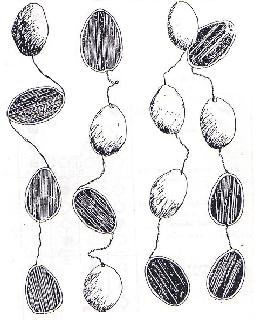
(HIGH PRIEST OF AFRICAN MYSTICAL SCIENCES)
EXPERIENCE THE ANCIENT SECRETS OF AFRICA!!! Divination/Consultations
African Medicine
African Naming
Ceremonies
African Weddings
Initiations
Shrine Work
Compelling Magic
Unjinxing
Orisha store!
IM Oliha Yiwama for a consultation. Reasonable rates.
Wednesday, October 14, 2009
FROM THE SUITCASE--Oliha Yiwama
Jammin' with Spirit
Wow! Saminaka had a great African festival last week--masquerades, music, drums, dance, cultural attire and talks. We had a record part icipation from our guests as well. I want to congratulate the new members of the African Mystics for embarking on their spiritual journey. Last but certainly not least, I'd like to congratulate and thank Tamsin for allowing all of this to take place. Go Tamsin! I gave a talk on African music and spirituality during the festival and launched the African Mystics group. The wonders and complexity of Nigeria are evident. Each one of the above activities has a major role in African mysticism.
In African mysticism, especially in Nigeria, inter-connectivity between various components of personal and communal expression is quite common. Some of the masquerade performers in the festival represented ancestral spirits and concepts that involve music, dance, and symbolic representation of moral codes. Others involved music, dance, and festivities.
The music and dance take the visual and aud ible realms to such an ecstatic level that the spiritual realm merges with the physical. As the masquerades danced and moved about Saminaka to the tunes of African music--traditional to modern--the energy vibes rose and corresponded with the vibrational level of participation of our guests. In short, it took us to a realm that was a mix of physical excitement and spiritual joy.
After the talk on African music, there was an impromptu drum jam. There were several drummers, and dancers took part as w ell. Many were dressed in African attire, but all were jamming to the sounds of Africa. We had djembe, xylophone, conga, horns, and other drums that played the beats specific to those instruments. The dancers floated freely on the dance floor, adding to the ephemeral experience. The dancers attenuated the drum beats, wiggling and jiggling to the melodic polyrhythms. The rhythms were often hypnotic, placing the drummer and dancer in a euphoric state and bond. There was no standing around or just watching the other avatars there--that kind of experience requires direct participation.
Later that night, DJs took over the course of the music. The DJs that spinned the jams at the festival were awesome! They played a mix of music that also brought out the spirit that resides in us. The dance area was full; t he music, as well as the vibes, lifted everyone’s spirit. All the avatars looked like kings and queens in their traditional African attire. But it was also more than the attire that brought out the beauty. It was the spirit from the festival experience. The spirit evolved from the combination of drum, dance, masquerade, music and cultural attire. A communal spiritual participation. The spirit moves us to commune with the divine when all the ingredients are there!
Tuesday, October 13, 2009
****Advertisement****
(HIGH PRIEST OF AFRICAN MYSTICAL SCIENCES)
EXPERIENCE THE ANCIENT SECRETS OF AFRICA!!! Divination/Consultations
African Medicine
African Naming
Ceremonies
African Weddings
Initiations
Shrine Work
Compelling Magic
Unjinxing
Orisha store!
IM Oliha Yiwama for a consultation. Reasonable rates.
Monday, September 7, 2009
UNDER THE MANGO TREE--Tamsin Barzane
 With Oliha's return from Nigeria, we're stepping up the African spirituality aspect of our sim, and, since this is a column rather than an article, I figure I can get personal with this material. I've had an interest in African spirituality since I was eleven and first read a Jorge Amado novel. I started making lists of Yoruba words and their translations (yes, yes, a curious child), and started the love affair that was to lead me to study African art.
While I am a Catholic from birth and happy with that, I've picked up a lot of information regarding African religions in my studies, research, and personal experience, and am always interested is seeing what those of us in the Americas like and promote. Well, the Yoruba win, hands down. They got a strong early start, since they were poured into Brazil (to create candomble) and Cuba (birthplace of la Regla da Ocha/santeria) in
 great
greatnumbers, and brought their religion along. Kongo people outnumbered them, but many had become Catholics in Africa, and their religion was more preoccupied with a High God and ancestors (and world manipulation through medicine) than with particular divinities. The Akan had an impact in Surinam, Jamaica, Brazil and other places, but again it was medicine--obeah--and the ancestors that held the spotlight. The religion of the Aja, who followed the vodunsi, was firmly planted in Haiti after the 1724 destruction of Allada by the Fon, who promptly rounded up all of Allada's findable citizens and shipped them out, but it transmuted in the New World when it collided with the Kongolese, creating a new Vodun ("voodoo") with deities in an Aja "Rada rite" and a Kongo "Petro rite."
Much of African religion in the New World died out after the the Africans who practiced it passed into the other world. In the U.S., it was primarily Kongo medicine practices that hung on through the root/conjure men and women and "hoodoo," though vodun came up to Louisiana with the entrance of Haitians. In the late 20th century, the spread of African religions through Cuban, Puerto Rican and Haitian immigration entered many urban communities, and the Yoruba continued to dominate.

Their special appeal is partially because the religion is so very rich, filled with several complex divination systems and a collection of randy, rambunctious deities that can match anything the Greeks had. In part, too, it is accompanied by exquisite works of art that speak straight to the soul, lauding the here and now but also alluding to the world beyond. And there's so much scholarship attached to Yoruba religion, in Nigeria and elsewhere--a devotee could while away considerable time in the library and on the Internet, where orisha (the name for the lesser deities who involve themselves with humans; the High God, Oludumare, keeps his distance) followers argue about points of doctrine as carefully as Hasidic scholars do.
The Yoruba themselves, however, are rapidly distancing themselves from traditional relgiion, though beliefs regarding medicine, witchcraft, ancestors and divination persist. But active worship and initiation? Except in rural areas, its practice has dropped radically in the past forty years. Scholars in the 1970s could merrily take photos of active shrines all over the place, manned by middle-aged priests and priestesses. Today? The shrine careta
 kers tend to be aged, the shrines themselves thick in palace areas, but crowded out in many regions.
Mosques and churches? Oh, hell yes! The sound of the 5:30 am call to prayer--over an insanely high-volume loudspeaker--awoke me everyday in Isolo, and the all-night Pentecostal services would abruptly awaken me with fear at 2 am, when a cry in the night usually meant thieves, not the faithful speaking in tongues. Muslim proselytization began in the early 1800s among the Yoruba, while the later 19th century saw an influx of Baptist and Methodist missionaries, followed by every other Christian denomination, as well as the invention of several new Christian brands that permitted polygamy and fought witchcraft.
When I did an informal survey of about 35 Yoruba under the age of 35 in 2002, I was surprised to see NOT ONE knew a friend or relative who was an orisha initiate. The only traditional festival any had attended was an egungun festival for the ancestors--popular and fun, no matter your usual spiritual affiliations (This egungun photo by Marilyn Houlberg). Many did not even know the names of most of the orisha, though all knew Ogun (god of iron and war, essential for those who drive taxis or use
 metal--computers are now under his purview) and Shango, both popular in Yoruba movies about the supernatural. But none knew the deity of smallpox, Shopona (Omolu in Brazil, Obaluaiye in Cuba). One young man in his twenties recognized the name, but didn't know the association. "My grandmother used to curse me with that name when I misbehaved," he said. "But I didn't know who it was."
We'll have future columns exploring the orisha in both real life and Second Life. For now I just want to note that making orisha ritual dress for the Saminaka shop Adire is a delight! In real life, I have been a ritual dressmaker in Benin City, making special appliqued wrappers for several high chiefs, as well as Olokun and Esango outfits for female initiates, and I will approach my SL constructions with equal respect, care, and informed knowledge.
Monday, July 27, 2009
FROM THE SUITCASE--Oliha Yiwama
 Oliha has managed to send another missive out from Nigeria, and I'm going to sprinkle it with some background info in brackets--he has big plans for implementing some of his RL interests into SL....
 combination. This links to certain verses, and the babalawo tells the client the source of his problems and prescribes a sacrifice to bring harmony to his world. The Yoruba also have another divination system that uses the throws of cowrie shells to pull the veil from the other world; this system survived in Brazil and Cuba, and has come to the US with the orisha religion.]
 kun, an original Edo deity of the great waters, Ogun, the deity of iron, Esu, the Yoruba trickster deity, Osun, the Edo equivalent of Osanyin, god of medicine, though he is more hot and fiery.


 Posts
Posts


